
Photo Credit: NY Times
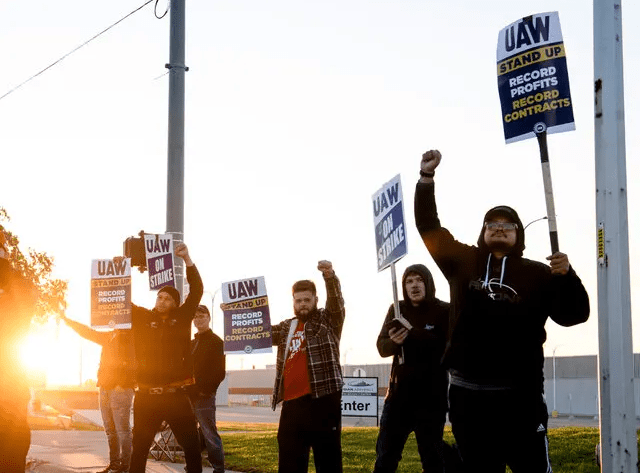
Last week, the contract between the United Auto Workers union (UAW) and the “big three” automakers expired. The UAW has already initiated selective strikes at three plants in the Midwest, with thousands of autoworkers now on strike. However, over ninety percent of active membership, including those in Charlotte, continue to work now under an expired contract.
General Motors, Ford, and Stellantis, known as the “Big Three” automakers, have made record profits in recent years off the backs of their employees. Now, auto workers across the country are demanding their share of these profits. They are calling for wage increases, an end to the tier system, cost-of-living adjustments, and an end to plant closures and layoffs.
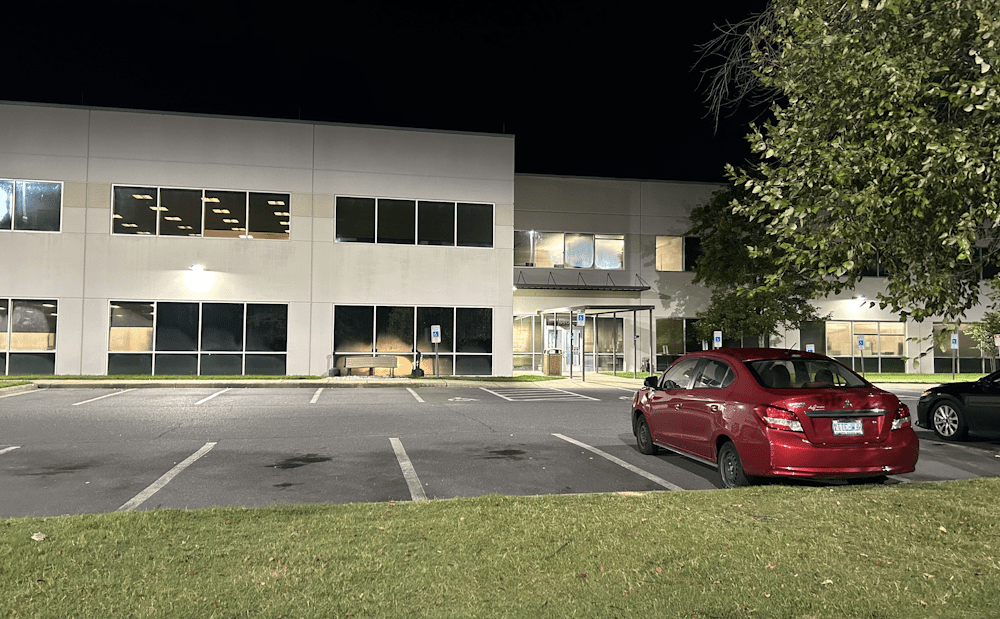
In Charlotte, despite rumors of a possible walkout at the General Motors (GM) Service Parts Operations warehouse on Westinghouse Blvd, the small group of workers there continued to work Thursday night when the contract expired. In 2019, dozens of auto workers at the warehouse went on strike for several weeks. Now they continue to work at the orders of their union leadership, despite the fact that over 90% of them voted to authorize a strike last month.
The isolated strike strategy ordered by UAW President Shawn Fain and union leadership weakens the collective power of the auto workers, isolating those who are on strike and forcing those who continue to work into increasingly dangerous conditions, unprotected from speed-ups or being fired for petty infractions. This is no accident from UAW leadership. The union bureaucracy works in close conjunction with the Biden administration, working to placate the rank-and-file to serve the interests of the companies and state. This is evident in the fact that the UAW did not launch its isolated strikes at critical engine and transmission plants, which would have shut down most of the North American auto industry. Instead due to their collaborationist role with the capitalist class, the UAW leadership opted for locations that would cause minimal damage to the US economy and the Big Three Automakers.
The UAW’s leadership is virtually openly corrupt, to such a degree that even the U.S. government has been forced to intervene. Over the past few years, more than a dozen UAW leaders, including several union presidents, have been convicted on charges of crimes such as wire fraud and embezzlement.
Various “leftist” organizations have mistakenly touted the strike as “militant” and “historic,” but the actions of the Big Three Automakers show that they are unfazed. All three companies’ stock prices are rising. One worker at a plant where they are striking in Michigan, frustrated with the UAW’s strike strategy said, “all the plants need to be out. Because we’re just one plant. They’re not going to feel this. They would feel it if we all walked out. Because they’d be losing billions by the day.”
The current plight of rank-and-file UAW members is further proof why workers need to organize independently of sellout union leadership and the state. If autoworkers are to win all the demands they deserve, they need an all-out strike. Due to its class interests, the UAW’s leadership has no plans to launch such a strike against the big three automakers, meaning rank-and-file will have to organize it themselves.
 Working People's Press
Leave a comment